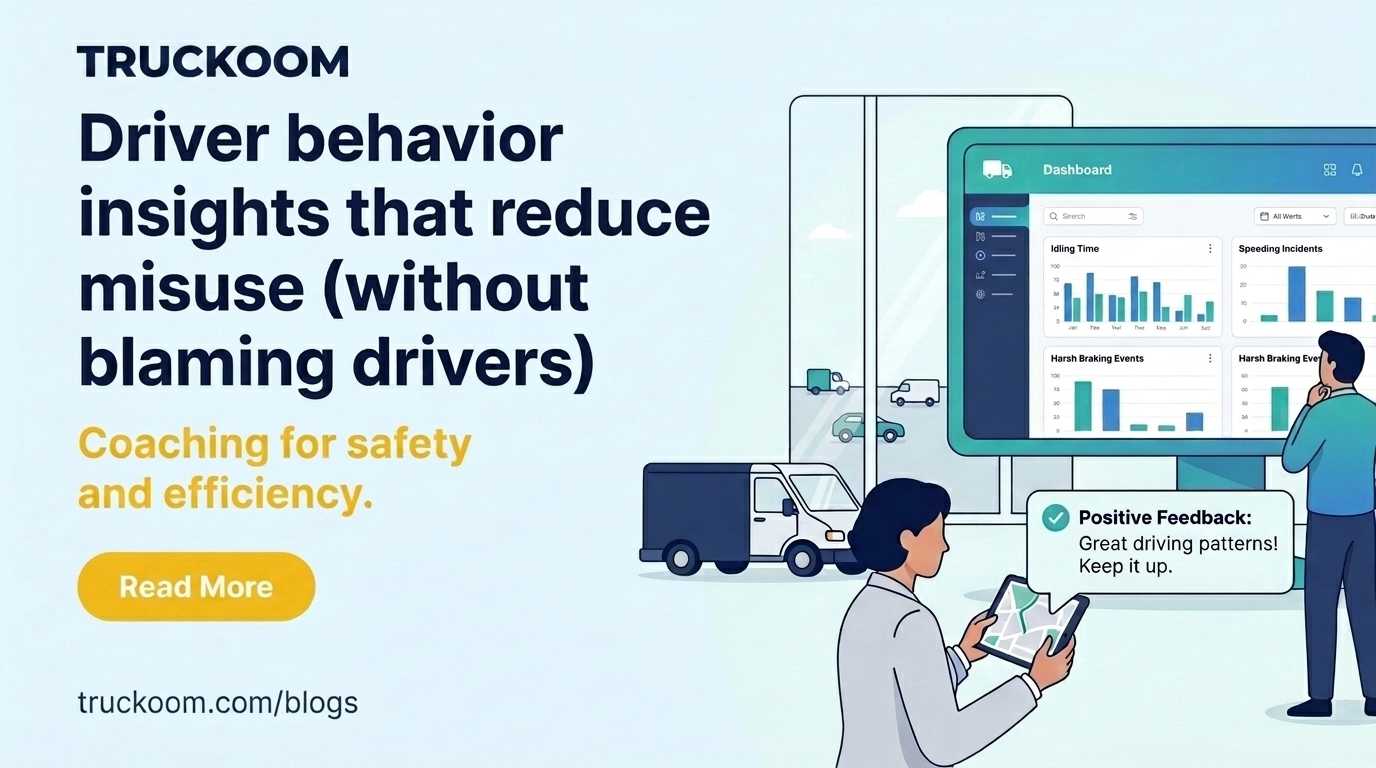

Driver behavior is one of the most sensitive topics in fleet operations. If it is handled poorly, it feels like blame. If it is ignored, costs increase quietly.
The practical approach is simple:
focus on patterns, make expectations clear, and coach one behavior at a time.
This blog explains how SMB fleets can use driver behavior insights to reduce misuse and improve safety, without turning operations into a policing culture.
Why “misuse” often happens
In many fleets, misuse is not intentional. It comes from:
- unclear rules (what counts as acceptable idling, speeding, detours)
- inconsistent enforcement (“today it matters, tomorrow it doesn’t”)
- pressure to meet timelines without a practical route plan
- lack of feedback until something goes wrong
Fixing behavior is not about being strict. It is about being consistent.
The 5 behavior signals that matter most
Instead of monitoring everything, focus on signals that repeatedly drive cost and risk:
1) Idling hotspots
Idling at specific sites often indicates a process issue, not driver attitude.
2) Speeding patterns by route/zone
Not all speeding is equal. Focus on repeated zones where risk is highest.
3) Harsh braking/acceleration
This is often linked to following distance and planning, not aggression.
4) After-hours vehicle movement
This can signal unauthorized use or a missing scheduling process.
5) Repeated route deviation
Sometimes it is local knowledge. Sometimes it is misuse. Either way, it needs a clear rule.
Turn insights into coaching (a simple weekly rhythm)
A weekly rhythm is more effective than constant alerts:
- Pick the top 1 behavior risk this week
- Identify the top 3 drivers by pattern (not by one event)
- Run short, factual coaching conversations
- Track improvement over 2–3 weeks
Use “fair thresholds” that drivers can understand
If a threshold feels arbitrary, it will get resisted.
Examples:
- “Idling over 8 minutes at pickup sites triggers a review”
- “Speeding events over X km/h in school zones trigger coaching”
- “After-hours movement requires supervisor confirmation”
The point is transparency.
Make it about outcomes, not rules
Drivers respond better to outcomes:
- less fuel waste
- fewer emergency maintenance issues
- safer workdays
- fewer customer escalations
Where Truckoom helps
Truckoom helps fleets turn driver data into practical coaching: behavior insights, repeat-pattern reporting, and exception monitoring that supports fair enforcement.
If you want a simple starting point, choose one:
- idling hotspots
- speeding patterns
- after-hours usage
Comment which one hurts most, and we’ll share the first threshold to set.